
The first conversation starts outside
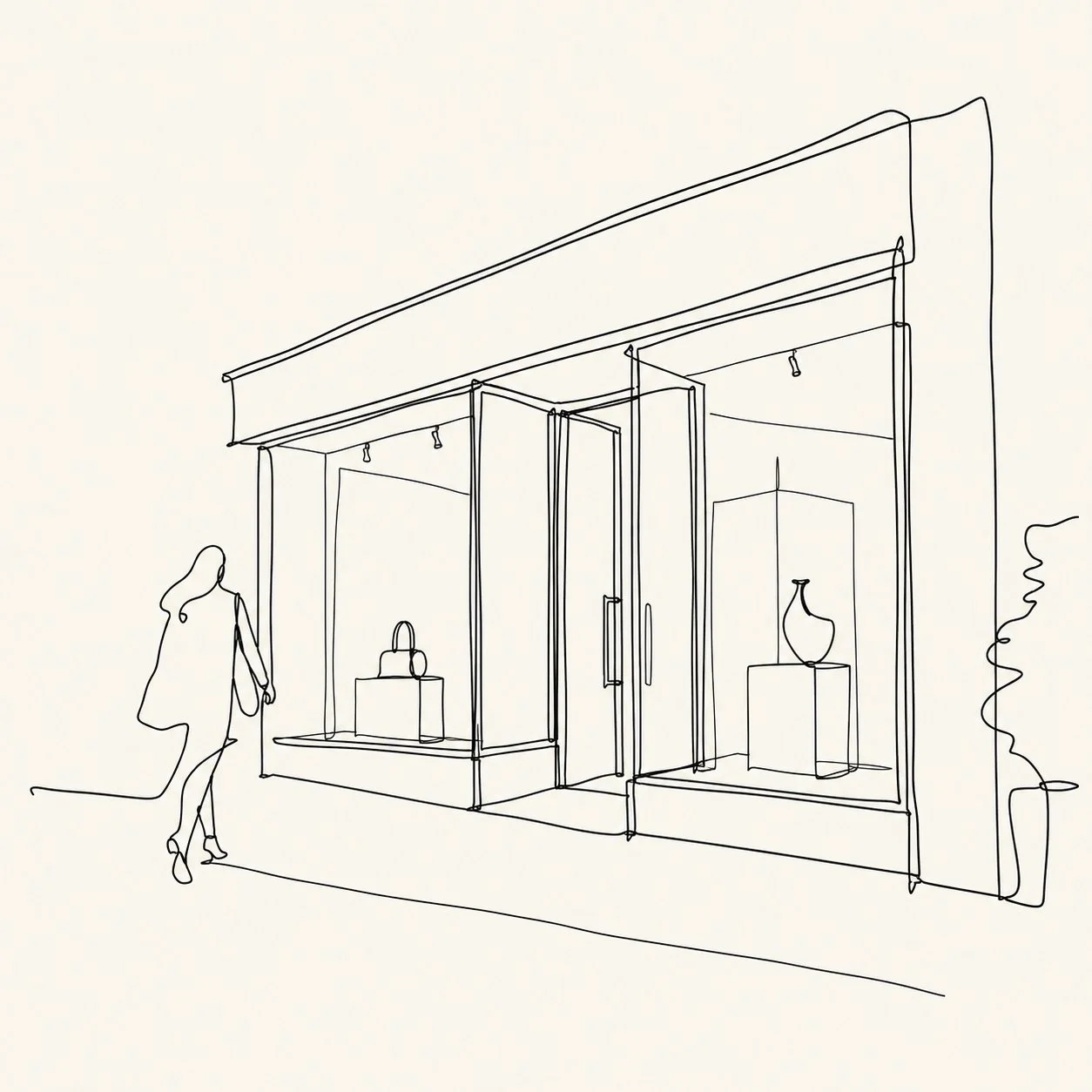
Before you notice a product, a logo or even the name above the door, you've already formed an opinion.
A shopfront usually has only a few seconds to catch your attention. That's often all the time someone needs to decide whether to slow down or keep walking. In that brief moment, the façade has one job: to communicate the essence of a brand without saying a single word.
Most of us never think about how we read a shopfront. We just do it. We notice the glass, the frame, the proportions, the depth of the entrance. Maybe one object catches our eye because of the way it's lit. None of these things feel deliberate when you're walking past, yet every one of them has been carefully considered. Together, they create a language that people understand almost instinctively.
Take depth, for example. A shopfront that sits flush with the street feels very different from one that's set back beneath a covered walkway. That small journey from the pavement to the door can build anticipation. It quietly suggests that what's inside is worth slowing down for. Brands looking for a greater sense of exclusivity often lean into that feeling. Brands that want to appear more open and approachable usually don't. Of course, context matters. In many shopping centres, the landlord's design guidelines shape how much freedom a tenant actually has.
Transparency changes the conversation too. A façade with large areas of glass feels open and welcoming. It lowers the barrier between the street and the store, inviting people to look inside. A more enclosed frontage, with carefully framed openings and less visibility, creates a different mood. It feels quieter, more private, more discreet. Neither approach is right or wrong. They're simply different ways of introducing a brand to someone who's never stepped through the door before.
Proportion plays an equally important role, even if it's harder to notice. A taller entrance can make a boutique feel almost ceremonial. Slim metal frames make the glass seem lighter and more refined. The balance between solid walls and transparent glazing shapes whether a storefront feels confident, understated, inviting or monumental. Long before anyone notices the finer details, they've already responded to the overall composition.
Then there's the window display. One carefully chosen product, placed on a simple plinth and lit with precision, suggests rarity. A broader display filled with different products creates a sense of abundance instead. Neither says anything about how much stock is actually inside the store. What it does shape is the feeling someone walks away with after those first few seconds.
None of this comes together the week before opening. It takes months of design, coordination and refinement, all while working within constraints most people never notice. The lease line defines exactly where a tenant's space begins and ends. Landlord design criteria determine how a shopfront can project, recess or occupy the space between the boutique and the public space.
Constraints aren't obstacles to work around. They're the framework that gives a project direction. Anyone can sketch ideas on a blank page. The real challenge is creating something distinctive while respecting technical requirements, commercial realities and the character of the place itself. Those boundaries aren't optional. They're what give good design its discipline.
Maybe that's why the best shopfronts rarely try too hard. A façade that tries to communicate everything usually ends up saying very little. The ones that stay with you are often the simplest. They commit to one clear idea and express it through proportion, materials, light and depth. Everything else supports that idea.
So the next time you find yourself slowing down outside a boutique without really knowing why, stop for a moment and look again. There's a good chance that pause wasn't accidental. It was shaped long before the first pane of glass was installed, through hundreds of small decisions working quietly together.
It's never just about designing a storefront. It's about shaping the first conversation between a brand and the people walking past it.
Sometimes that conversation lasts only a few seconds.
Sometimes, that's all it needs.